
Subdivision development Fayetteville AR works more clearly when each review stage produces information the next construction decision can actually use. Instead of treating the project as one continuous stretch of site work, developers can organize it around decision gates: what has been documented, what has been approved, what still depends on professional review, and what field activity is ready to proceed.
Fayetteville’s process also asks developers to define intended use, surrounding street relationships, natural features, utilities, and the proposed traffic system.
Casey Turner Construction works with developers and landowners planning larger residential projects in Fayetteville, AR and its nearby areas, keeping construction discussions tied to the project’s current stage.
Recognize the Development Stage Before Discussing Later Work, Bella Vista
Fayetteville separates subdivision review into stages that include conceptual, preliminary, concurrent, and final plat applications. Each stage carries different information requirements, so the construction conversation should reflect where the project currently stands.
For subdivision development Fayetteville AR, a concept-level property should not be treated like a site with a final plat and completed construction documents. Identifying the review stage helps keep early construction planning tied to information that is actually available.
Use Conceptual Plat Information to Frame Early Decisions, Springdale
Fayetteville’s conceptual plat checklist calls for information about topography, natural and physical features, proposed utilities, land use, the traffic system, proposed structures, and subdivision identification.
When subdivision development Fayetteville AR is still in an early planning stage, those details can show which construction questions are ready for discussion and which still depend on design, engineering, surveying, utility coordination, or city review.
Let the Existing Property Shape the Development Discussion, Centerton
A development plan in Fayetteville may need to identify existing watercourses, floodplains, tree cover, topography, and other physical features. Those conditions provide important information about the property before construction begins. Subdivision development Fayetteville AR should therefore start with documented site characteristics rather than assumptions about undeveloped acreage.
Separate What the Property Has From What the Plan Adds, Lowell
A useful project file distinguishes what is already on the property from what is proposed. Existing streets, utilities, terrain, drainage features, and other conditions provide context for planned roads, lots, utility service, and residential construction. For subdivision development Fayetteville AR, keeping those categories separate makes project discussions more precise and avoids describing proposed improvements as though they already exist.
Include Fire-Safety Considerations in Early Access Planning, Pea Ridge
Fayetteville’s Fire Marshal reviews one- and two-family subdivision projects for fire apparatus access, fire flow and water supply requirements, and hydrant locations. Projects moving through the city’s Technical Plat Process also require fire-related review documentation. That local process matters to subdivision development Fayetteville AR because access planning serves a public-safety purpose in addition to supporting construction activity.
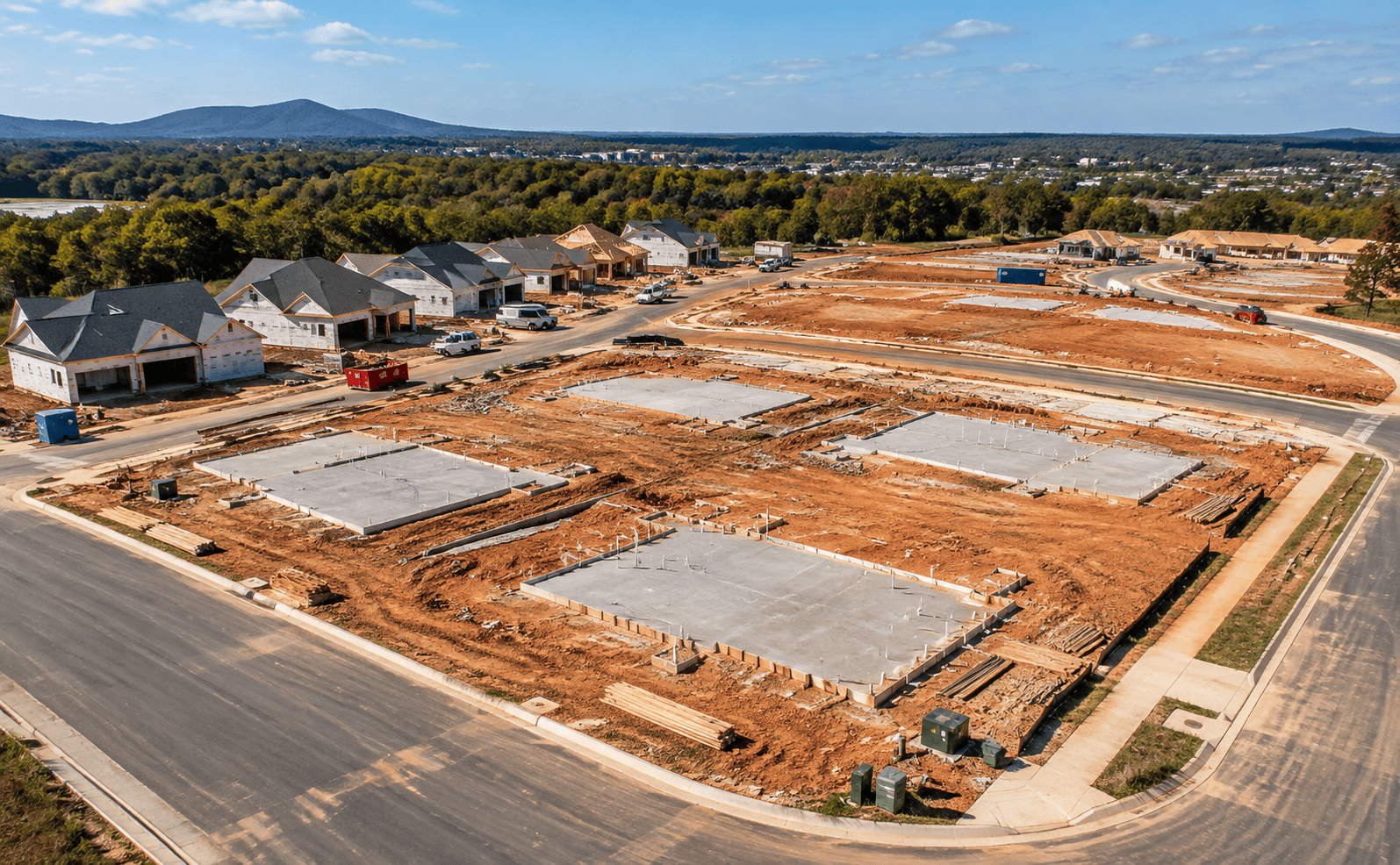
Recognize When Infrastructure Becomes a Construction Milestone, Fayetteville
Fayetteville’s construction guidance addresses fire hydrants, water supply, and fire-access roadways during the preconstruction process. Applicable infrastructure may need to reach required stages before vertical construction proceeds. For subdivision development Fayetteville AR, that creates a meaningful transition between preparing the site and moving toward home construction.
The Property Scope Helps Define Which Services May Apply, Siloam Springs
Casey Turner Construction’s residential subdivision construction services include work connected to lot preparation, roads, utilities, grading, drainage, and development coordination. For subdivision development Fayetteville AR, developers can also consider the company’s land preparation and development services when the property requires broader site work before subdivision infrastructure or future residential construction can advance.
Use the Fayetteville Service Hub for Related Capabilities, Tontitown
A development may require more than one construction service as it progresses. Preconstruction planning, construction management, land development, and other capabilities can become relevant depending on the project scope. Casey Turner Construction’s construction services for Fayetteville projects provide the local service hub for reviewing those related capabilities.
Utility Information Adds Important Context to Early Project Planning, Rogers, AR
The most useful initial conversation includes the property location, current plat stage, available plans, known site conditions, utility information, work already completed, and the construction scope being considered.
This gives subdivision development Fayetteville AR a project-specific starting point instead of a generic one. Casey Turner Construction can evaluate how its documented services fit the proposed work while design, engineering, surveying, utility, and regulatory responsibilities remain with the appropriate parties.
Your Fayetteville Development Details Belong at the Center of the Conversation
If you are planning subdivision development Fayetteville AR in Fayetteville, AR and its nearby areas, fill out the website form to schedule your Free Quote. To plan the next step for subdivision development Fayetteville AR, call Casey Turner Construction at 479-408-4747 and share where the project currently stands.